
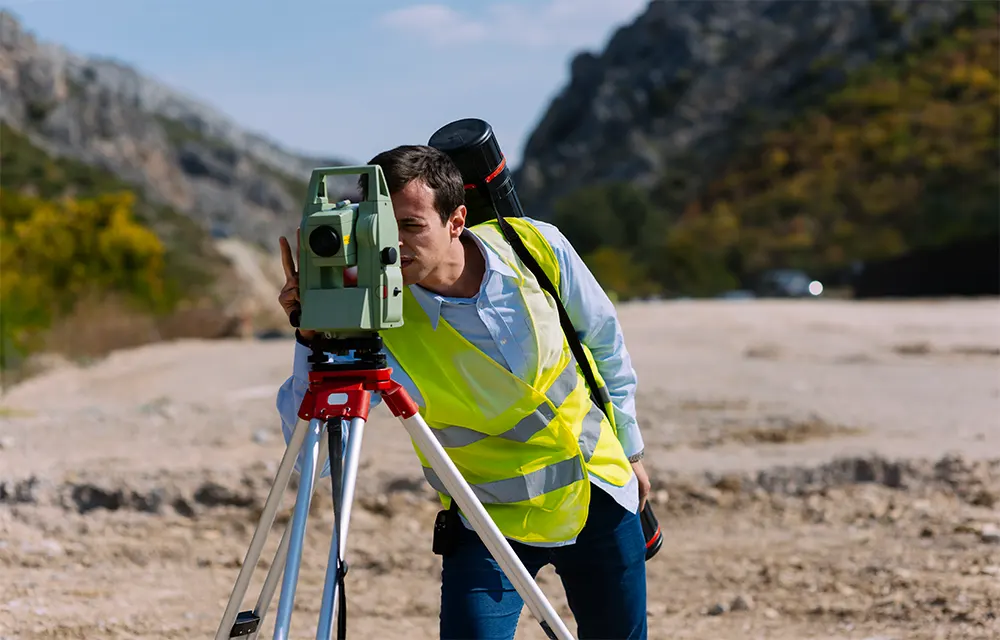
Land surveying in New Zealand plays a vital role in shaping the nation’s built environment, supporting everything from residential property development to large-scale infrastructure projects. Accurate land surveying in New Zealand provides the foundation for safe construction, legal land ownership, and environmental protection. Without proper land surveying in New Zealand, projects risk boundary disputes, regulatory non-compliance, and costly design errors.
As a country with diverse landscapes (from rugged coastlines to seismic-prone regions) New Zealand requires precise and reliable surveying practices. In this article, I will break down what land surveying in New Zealand involves, its importance, key types of surveys, governing regulations, and its role in civil engineering and construction.
Defining Land Surveying in New Zealand
Land surveying in New Zealand is the science and practice of measuring land, mapping boundaries, and documenting spatial information to support legal, engineering, and planning purposes. Licensed cadastral surveyors, registered with Surveyor-General’s Office under Land Information New Zealand (LINZ), carry out surveys that ensure compliance with laws such as the Cadastral Survey Act 2002.
In simpler terms, land surveying in New Zealand ensures clarity of land ownership, accurate project planning, and compliance with national standards.
Why Land Surveying in New Zealand Matters
The importance of land surveying in New Zealand goes far beyond drawing boundaries on a map. land surveying in New Zealand, it serves several essential purposes:
Legal Clarity in Property Ownership
Boundaries are legally defined through cadastral surveys, protecting both homeowners and developers from disputes. In a country where land ownership is highly valuable, reliable surveying prevents costly litigation.
Supporting Civil Engineering and Infrastructure
Surveying provides accurate site data for roads, bridges, utilities, and commercial developments. Engineers rely on survey reports for terrain analysis, slope measurements, and design integration.
Environmental and Seismic Considerations
New Zealand’s seismic activity and diverse natural landscapes make land surveying essential for identifying safe building zones, avoiding unstable ground, and managing environmental risks.
Enabling Urban Growth
As cities like Auckland, Wellington, and Christchurch expand, surveying ensures that subdivisions, roads, and services are laid out efficiently and in compliance with planning regulations.
Types of Land Surveying in New Zealand
Land surveying in New Zealand covers a wide spectrum of services tailored to specific project needs. The most common types include:
Cadastral Surveying
This involves establishing and re-establishing property boundaries. It is essential for land transfers, subdivisions, and resolving boundary disputes. All cadastral surveys in New Zealand must be approved and lodged with LINZ.
Engineering Surveys
Engineering surveys focus on construction and civil projects. They involve topographical mapping, site layout, and measurement of structures during and after construction.
Topographic Surveys
Topographic surveys map natural and man-made features, such as slopes, vegetation, buildings, and roads. These surveys are crucial for planning new developments while respecting the existing environment.
Geodetic Surveys
New Zealand has its own national geodetic system, known as NZGD2000, which provides reference points for mapping and satellite positioning. Geodetic surveys ensure consistency across national projects.
Hydrographic Surveys
With an extensive coastline, New Zealand requires hydrographic surveys for harbours, coastal protection, and marine development. These surveys map water depths and seabed features.
The Process of Land Surveying in New Zealand
A typical surveying process involves several key stages:
- Preliminary Research: Reviewing historical records, titles, and existing survey plans.
- Field Measurements: Using total stations, GPS, and drones to capture site data.
- Data Analysis: Processing measurements to create maps, models, and reports.
- Regulatory Compliance: Lodging cadastral surveys with LINZ for approval.
- Final Reporting: Delivering survey plans, boundary certifications, and construction layouts.
Modern land surveyors also rely on GIS (Geographic Information Systems) and LiDAR (Light Detection and Ranging) for precise 3D mapping.
Regulations and Standards for Land Surveying in New Zealand
Land surveying in New Zealand is tightly regulated to ensure accuracy and legal validity. Key regulations include:
- Cadastral Survey Act 2002: Governs cadastral surveys and surveyor licensing.
- Surveyor-General Rules: Technical rules that define accuracy, data formats, and reporting.
- Resource Management Act (RMA): Ensures surveying considers environmental impacts and planning requirements.
- Building Act 2004: Links surveying with construction compliance.
Only licensed cadastral surveyors can conduct legal boundary surveys in New Zealand. They must also maintain professional standards under the Cadastral Surveyors Licensing Board of New Zealand (CSLB).
Modern Technologies in Land Surveying in New Zealand
The field of land surveying in New Zealand has advanced significantly with technology. Today, surveyors in New Zealand use:
- GPS & GNSS for satellite-based positioning with centimeter-level accuracy.
- Drones/UAVs for aerial mapping of large or hard-to-reach areas.
- LiDAR scanning for detailed terrain and vegetation analysis.
- BIM integration to link survey data with 3D building models.
These technologies allow for faster, safer, and more precise data collection, benefiting both small residential projects and large-scale infrastructure works.
The Role of Surveying in Land Development
In land development projects, surveying acts as the foundation for:
- Subdivisions: Defining new property lots.
- Infrastructure Placement: Planning utilities, roads, and drainage.
- Environmental Protection: Ensuring development does not harm wetlands, waterways, or unstable slopes.
- Construction Layout: Positioning buildings, retaining walls, and roads with precision.
Without accurate land surveying, land development projects would face delays, cost overruns, and compliance issues.
Challenges in Land Surveying in New Zealand
Land surveying in New Zealand is not without its challenges, especially given New Zealand’s environment:
- Seismic Risk: Constant ground movement in earthquake-prone areas requires continuous monitoring.
- Complex Terrain: Mountains, coastlines, and rural landscapes pose accessibility issues.
- Urban Density: In cities, limited space and infrastructure congestion make surveying more complex.
- Regulatory Compliance: Navigating multiple layers of legal approval adds time and complexity.
Conclusion
Land surveying in New Zealand is a cornerstone of property ownership, civil engineering, and construction. From establishing legal boundaries to supporting complex infrastructure projects, surveyors ensure accuracy, safety, and compliance in every stage of development.
As technology evolves, surveyors in New Zealand are adopting drones, LiDAR, and advanced GIS to meet the growing demands of urbanisation and environmental resilience. For property owners, developers, and engineers alike, engaging qualified land surveyors is not just a regulatory necessity, it’s the first step toward successful and sustainable development.
To learn more about how professional land surveying services can support your next project, visit our Contact Us page.