
Before construction begins, the success of any project depends heavily on knowing exactly what lies beneath the ground surface. A ground investigation is the process of studying subsurface conditions to provide engineers, architects, and developers with accurate information for design and construction. Without it, projects risk instability, unexpected costs, and structural failures.
In this article, we will explain what happens during a ground investigation, why it matters, and how it supports safe, efficient, and cost-effective development.
The Purpose of a Ground Investigation
A ground investigation identifies the geotechnical, geological, and environmental conditions of a site. Its main goals are to:
- Assess whether the ground is suitable for the proposed development.
- Identify risks such as soil instability, groundwater problems, or contamination.
- Provide engineers with data for foundation design and structural analysis.
- Ensure compliance with building codes and environmental regulations.
This is not just a preliminary step, it is the foundation of informed decision-making for the entire project lifecycle.
Step 1: Desk Study and Preliminary Research
Every ground investigation begins with a desk study, which involves reviewing available information before any physical testing is conducted. This includes:
- Historical land use records to detect possible contamination.
- Geological maps to understand expected soil and rock types.
- Aerial photographs to identify previous land modifications or drainage issues.
- Local authority records for zoning, utilities, and restrictions.
The desk study helps engineers form hypotheses about potential risks and determine where to focus site investigations.
Step 2: Site Walkover Survey
Next, engineers perform a visual inspection of the site. A walkover survey looks for:
- Evidence of erosion, slope instability, or previous landslides.
- Signs of waterlogging, drainage issues, or flooding potential.
- Existing vegetation that could hint at poor soils or groundwater conditions.
- Man-made structures, old foundations, or landfill sites.
This step provides early red flags that may require further exploration.
Step 3: Ground Exploration Techniques
The core of a ground investigation is the physical exploration of subsurface conditions. Depending on the project, this may include:
Boreholes
Drilled at strategic points to extract soil and rock samples. Boreholes provide information on soil layering, strength, and groundwater levels.
Trial Pits
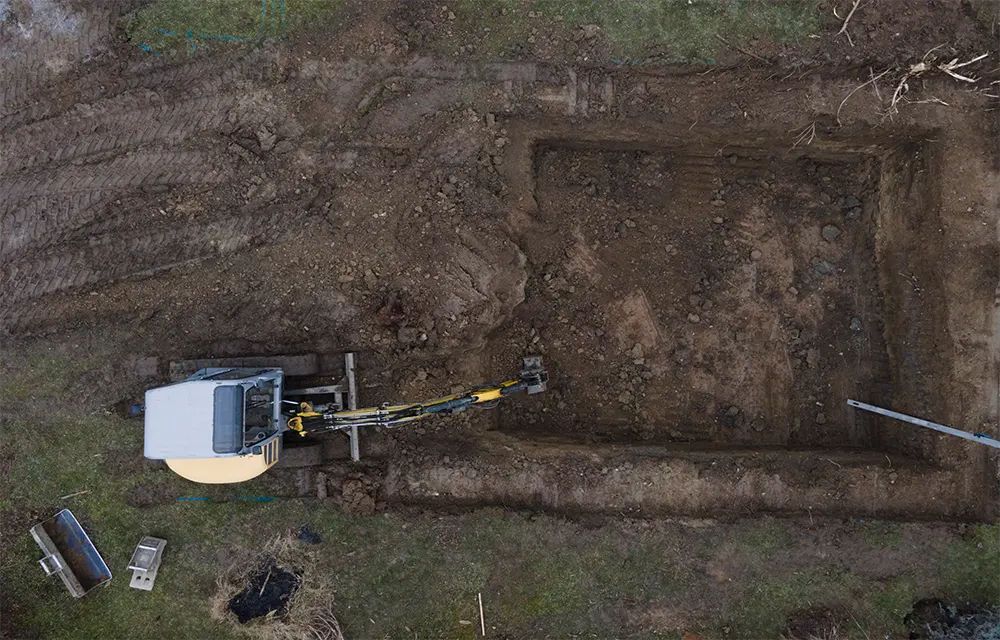
Excavated areas that allow visual inspection of soil strata and collection of larger samples. They are particularly useful for shallow foundations.
Probing and Penetration Tests
In-situ tests like the Standard Penetration Test (SPT) or Cone Penetration Test (CPT) measure soil resistance and density, offering insight into bearing capacity.
Geophysical Surveys
Non-invasive techniques like seismic or resistivity testing provide broader subsurface data, often complementing boreholes and pits.
Each method reveals crucial details about soil behavior and structure, helping engineers design safe foundations and support systems.
Step 4: Soil and Rock Testing in the Laboratory
Samples collected during exploration are sent to a laboratory for detailed analysis. Tests may include:
- Moisture content tests to understand soil-water interactions.
- Atterberg limits to determine plasticity and potential for shrink-swell movement.
- Shear strength tests to assess slope stability and bearing capacity.
- Compaction tests to evaluate how soil will perform under load.
- Chemical testing to detect contamination that could affect construction or health.
Laboratory results provide the hard data needed for accurate geotechnical reports.
Step 5: Groundwater Monitoring
Groundwater is a major factor in construction feasibility. Engineers monitor groundwater levels using standpipes or piezometers installed in boreholes. This helps determine:
- Seasonal fluctuations in water levels.
- Potential for water ingress during excavation.
- Risk of liquefaction in seismic regions like New Zealand.
Ignoring groundwater conditions is one of the leading causes of construction delays and foundation failures.
Step 6: Data Analysis and Geotechnical Reporting
Once all data from ground investigation is collected, engineers compile it into a geotechnical report. This document includes:
- Soil and rock profiles.
- Strength and stability assessments.
- Groundwater conditions.
- Potential risks and recommended mitigation strategies.
- Design parameters for foundations, retaining walls, and other structures.
This report becomes the reference point for all structural and civil design decisions.
Why Ground Investigations Are Essential
Skipping or minimizing ground investigations exposes developers to serious risks:
- Safety hazards: Buildings on weak or unstable soil may collapse.
- Unexpected costs: Remediation during construction is far more expensive than early planning.
- Regulatory delays: Authorities often require geotechnical data before granting approvals.
- Reputation damage: Poorly designed projects harm developers, contractors, and engineers alike.
By contrast, a thorough ground investigation ensures projects are safe, compliant, and financially viable.
Conclusion: Building on Knowledge, Not Assumptions
A ground investigation is far more than digging holes, it is a comprehensive process of research, testing, and analysis that provides the foundation for sound engineering. From desk studies to lab tests, every stage builds confidence that the land can support the intended development.
At our firm, we provide comprehensive ground investigations tailored to the unique challenges of each site, ensuring that risks are identified and solutions are engineered early.
Start your project on a strong foundation, Contact us today to discuss site investigations, soil testing, and geotechnical report services.