
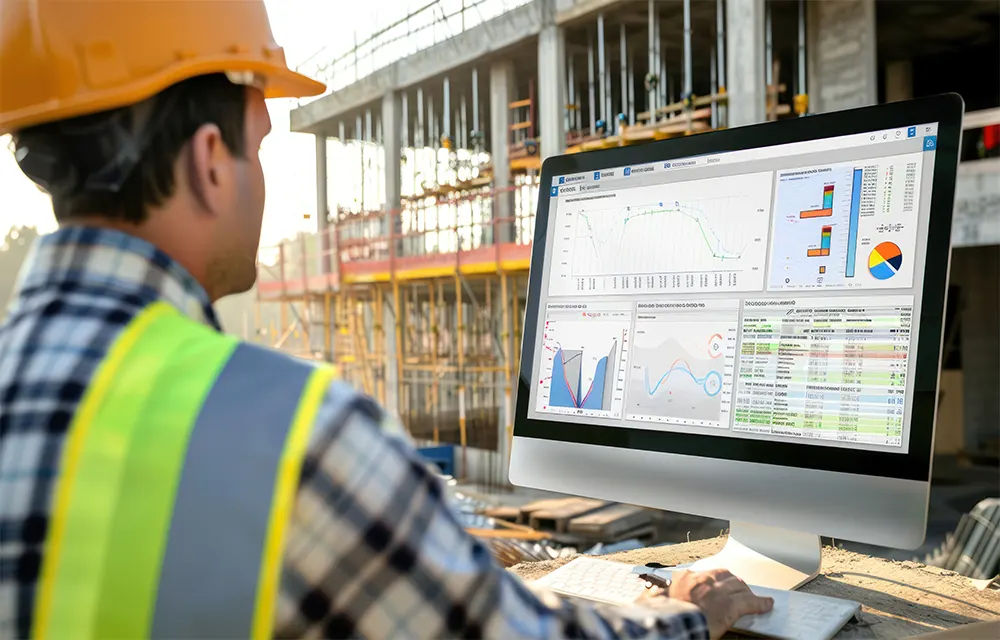
In any civil engineering or infrastructure development project, success does not stop at the design stage, it depends just as much on execution. Even the most carefully prepared geotechnical reports and structural designs can fall short if construction practices deviate from specifications. This is where construction monitoring becomes indispensable, particularly for ensuring geotechnical stability.
construction monitoring is really important in any project because By supervising construction activities in real time, engineers safeguard against risks like settlement, slope failure, foundation issues, or water ingress, protecting both safety and long-term performance.
What Is Construction Monitoring?
Construction monitoring is the process of observing and verifying that all site activities comply with design specifications, safety regulations, and engineering standards. It involves:
- Regular site inspections by engineers or geotechnical specialists.
- Measuring soil behavior, such as settlement, pore water pressure, or lateral movement.
- Monitoring structural elements, including foundations, retaining walls, and slopes.
- Documenting compliance with environmental and safety guidelines.
The goal of construction monitoring is to provide early warnings and corrective actions before issues escalate into costly failures.
Why Geotechnical Stability Matters
The ground beneath a structure is not uniform, it reacts to load, weather, and time. Without proper oversight, geotechnical risks can compromise an entire project. Common concerns include:
- Soil Settlement: Uneven settlement can cause cracking in buildings and roads.
- Slope Failures: Poorly stabilized slopes or embankments may collapse under stress.
- Foundation Instability: Improper installation or soil-structure mismatch weakens load transfer.
- Water-Related Issues: Rising groundwater or poor drainage can reduce soil strength.
- Seismic Risks: In earthquake-prone areas, construction must adhere to strict stability measures.
Construction monitoring ensures that these issues are detected early and addressed promptly.
Key Benefits of Construction Monitoring for Geotechnical Stability
- Early Detection of Ground Movement
Instruments such as inclinometers, piezometers, and settlement plates provide real-time data. If soil begins to shift or water pressure builds, corrective measures can be taken immediately.
- Verification of Design Assumptions
Site conditions can change between investigation and construction. Construction monitoring validates that actual soil performance aligns with geotechnical design models.
- Risk Reduction and Safety Assurance
Unmonitored projects risk structural instability, worker accidents, or even catastrophic failures. Regular inspections help safeguard human lives and project investments.
- Regulatory and Legal Compliance
In New Zealand and other regions with strict seismic and safety codes, construction monitoring ensures compliance with building regulations and environmental requirements.
- Long-Term Performance
Structures built with continuous construction monitoring are less likely to experience costly repairs or premature deterioration. Monitoring extends the life and resilience of infrastructure.
Techniques Used in Geotechnical Monitoring
- Visual Inspections: On-site checks for cracks, erosion, and settlement.
- Instrumentation: Tools like strain gauges, load cells, and vibration monitors.
- Drone Surveys: Aerial imaging for large-scale slope and site monitoring.
- Geotechnical Logging: Recording soil and rock conditions during excavation.
- Remote Monitoring Systems: Real-time data collection and alerts for high-risk areas.
Example: Construction Monitoring in Practice
Consider a slope stabilization project near Wellington. Engineers installed inclinometers and piezometers to monitor soil movement and groundwater pressure during retaining wall construction. When readings indicated unexpected pore pressure increases, drainage improvements were introduced before slope failure could occur. Without monitoring, the project could have faced severe delays, higher costs, or even collapse.
Conclusion: A Non-Negotiable Step for Stability
Construction monitoring is not just an optional safeguard, it is a critical layer of protection in geotechnical engineering. By ensuring compliance, detecting risks early, and validating design assumptions, it strengthens both the safety and longevity of civil projects.
At our firm, we provide comprehensive construction monitoring services, using advanced instrumentation and expert oversight to ensure geotechnical stability from start to finish.
Protect your project from costly risks Contact us today to learn how our monitoring solutions can safeguard your site.