
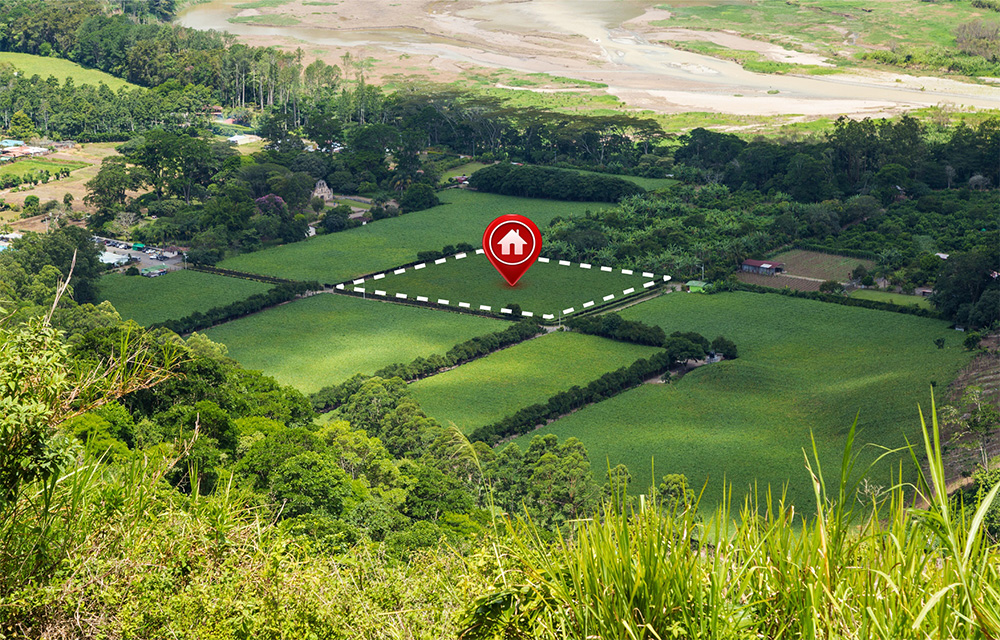
Developing land for residential, commercial, or infrastructure purposes requires more than just architectural vision or urban planning it starts beneath the surface, with the soil and rock that will support the entire structure. Geotechnical engineering is the foundation (both literally and figuratively) of any successful land development project.
Geotechnical considerations in land development play a critical role in determining whether a proposed site is suitable for construction, how it should be built, and what measures are required to ensure long-term performance and safety. Poor geotechnical evaluation can lead to structural failures, landslides, water ingress, and costly delays, making it one of the most essential disciplines in engineering and land-use planning.
In this comprehensive article, we explore the full scope of geotechnical involvement in land development, from initial site investigations to soil testing, slope stability assessments, foundation design, and monitoring during construction. The importance of this work cannot be overstated, especially as developments push into more complex terrains and as climate-related environmental risks grow.
Why Geotechnical Considerations in Land Development Is Critical
Every construction project depends on the load-bearing capacity and stability of the ground. Without a detailed understanding of subsurface conditions, developers risk choosing the wrong foundation type, encountering unexpected settlement, or even triggering landslides or sinkholes.
Key reasons geotechnical considerations are critical include:
- Understanding ground behavior: Different soils and rocks behave differently under load. Clay expands, sand drains quickly, peat compresses easily each has implications for construction.
- Ensuring structural safety: Foundations must be designed according to site-specific geotechnical conditions to avoid collapse or uneven settlement.
- Mitigating environmental risks: Sites in hilly, flood-prone, or seismically active areas require specialized geotechnical strategies to prevent disasters.
- Supporting sustainable development: Proper geotechnical analysis helps minimize excavation, optimize foundation design, and reduce environmental impact.
In short, geotechnical engineering is the bridge between geology and civil engineering, ensuring that developments stand the test of time and nature.
Initial Site Investigation and Its Importance
Land development begins with a geotechnical site investigation a detailed exploration of the soil, rock, groundwater, and topography of the site. This process includes both desk-based studies and physical exploration.
Desktop Study
Before drilling or testing, geotechnical engineers analyze existing geological maps, previous site records, aerial imagery, and environmental reports. This provides an overview of the site’s geological history and potential risks such as:
- Historical landslides
- Flood zones
- Earthquake fault lines
- Previous industrial contamination
This information sets the stage for targeted physical investigations.
Field Investigation
Fieldwork involves a series of techniques to collect data from the ground itself. These include:
- Boreholes: Drilled to assess soil layers and collect samples.
- Test pits: Dug to visually inspect and sample soil near the surface.
- Cone penetration tests (CPT): Measure soil resistance to penetration.
- Geophysical surveys: Use seismic or electrical methods to map subsurface features.
These investigations provide the raw data needed for analysis of soil behavior, groundwater conditions, and load-bearing capacities.
Laboratory Testing and Soil Classification
Once samples are collected, they are analyzed in a laboratory to determine their properties. This information is used to classify the soil and predict how it will behave under load and in varying moisture conditions.
Common tests include:
- Grain size distribution: Identifies the proportion of clay, silt, sand, and gravel.
- Atterberg limits: Determines the plasticity and shrink-swell potential of fine-grained soils.
- Compaction tests: Establish the optimum moisture content for achieving maximum density.
- Shear strength tests: Assess how much load the soil can resist before failure.
- Consolidation tests: Evaluate how much and how quickly soil will settle under pressure.
These tests are not just academic they directly influence decisions about foundations, retaining walls, drainage, and more.
Slope Stability and Earthworks Considerations
In areas with uneven terrain or significant elevation changes, slope stability becomes a major concern. Slopes may fail due to excessive rainfall, erosion, seismic activity, or human modification such as cutting and filling.
Geotechnical engineers assess slope stability using methods like:
- Limit equilibrium analysis: Calculates the factor of safety against failure for existing or proposed slopes.
- Soil nailing or anchoring: Used to stabilize steep cuts during construction.
- Reinforced earth solutions: Employ geogrids or mechanically stabilized earth (MSE) walls for embankments.
- Drainage controls: Reduce pore water pressure that can weaken slope integrity.
Improperly managed earthworks can lead to delays, increased costs, or even catastrophic failure. Geotechnical input is essential for reshaping land safely and sustainably.
Foundation Design Based on Geotechnical Inputs
One of the most direct applications of geotechnical work in land development is the design of building foundations. Based on soil bearing capacity, groundwater levels, and settlement potential, engineers determine which type of foundation is best suited.
Common Foundation Types:
- Shallow foundations: Suitable for strong, stable soils near the surface.
- Raft foundations: Spread load over a large area where soils are weaker.
- Deep foundations (piles or caissons): Transfer loads to deeper, stronger soil or rock layers.
- Pad and strip footings: Used for light buildings on competent soils.
In areas with expansive clay, high groundwater, or seismic risk, special techniques such as soil stabilization or base isolation may be required.
A good foundation does not only support the structure it also minimizes future movement, cracking, and maintenance costs.
Geotechnical Reports and Documentation
After investigations and analysis, geotechnical engineers compile their findings into a formal Geotechnical Report. This document is critical for the design team, architects, contractors, and regulatory bodies.
Key components of a geotechnical report include:
- Site description and geological setting
- Summary of field and lab investigations
- Soil stratigraphy and classification
- Groundwater conditions
- Recommendations for foundation type and depth
- Slope stability assessments
- Earthwork and drainage guidelines
- Seismic risk evaluations (if applicable)
Without this report, design decisions would be based on guesswork a costly and dangerous approach.
Construction Monitoring and Geotechnical Oversight
Geotechnical responsibilities do not end once construction begins. Engineers must often oversee excavation, foundation installation, compaction, and other site activities to ensure that work follows the design intent and that unexpected conditions are managed effectively.
Examples include:
- Verifying that soil beneath foundations matches expectations
- Adjusting design if rock is encountered at a different depth than expected
- Monitoring groundwater inflow or soil movement
- Approving replacement fill materials or compaction methods
On complex projects, geotechnical engineers also install instruments such as inclinometers, piezometers, or settlement plates to monitor behavior during and after construction.
This oversight protects structural integrity and helps maintain safety throughout the project lifecycle.
Challenges and Opportunities in Modern Land Development
Land development today faces a unique set of challenges that make geotechnical input more important than ever:
- Urban densification: Developing smaller or more complex parcels of land.
- Climate change: Increasing rainfall, rising water tables, and more landslide-prone conditions.
- Regulatory scrutiny: Growing emphasis on environmental impact and sustainability.
- Cost pressures: Need to balance thorough investigation with project budgets.
At the same time, advancements in geotechnical technologies (from digital modeling to remote sensing) are enabling more precise, efficient, and predictive engineering.
Forward-thinking developers increasingly see geotechnical expertise not as a cost, but as an investment that reduces long-term risk and enhances value.
Conclusion: Building Success from the Ground Up
Geotechnical considerations in land development are the silent backbone of successful construction. By understanding the earth beneath our feet (its strengths, weaknesses, and behaviors) engineers can design and develop with confidence, safety, and efficiency.
From site investigation and soil testing to foundation design and construction monitoring, geotechnical engineering ensures that every structure has a stable and sustainable base. Ignoring these principles can lead to serious consequences, but embracing them paves the way for resilient, cost-effective, and future-ready developments.
Planning a land development project and need expert geotechnical support? Contact our team to discuss site investigations, testing, and design tailored to your needs.