
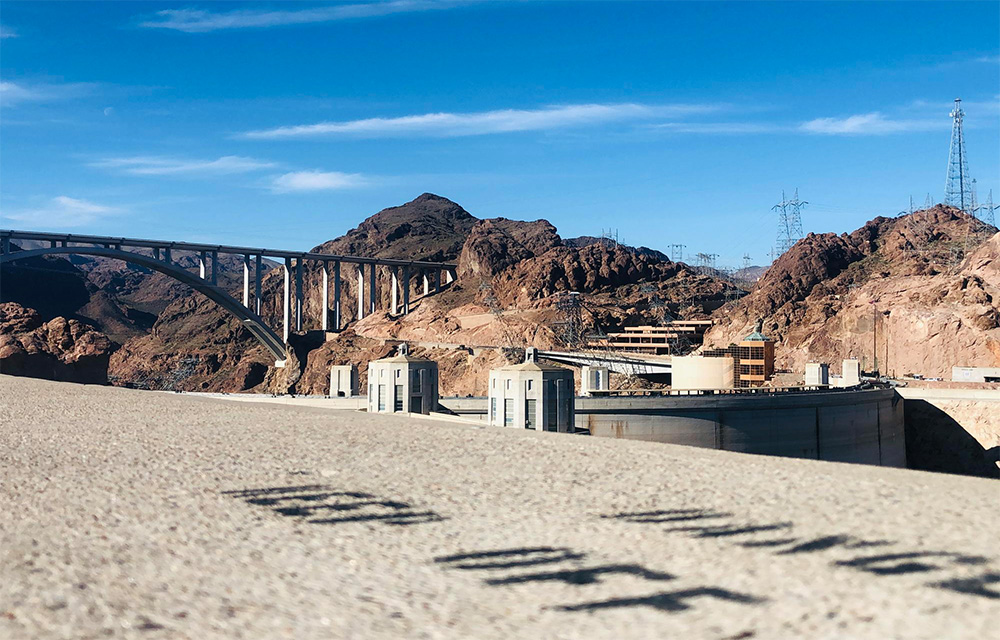
In the realm of civil and infrastructure development, geotechnical engineering serves as the foundational science that ensures safety, stability, and structural performance. As projects grow in complexity and extend into challenging terrains (such as soft soils, steep slopes, reclaimed land, or seismically active zones) the role of advanced geotechnical solutions becomes critical.
Geotechnical engineering for complex sites demands more than just standard site investigation and soil classification. It involves integrating high-resolution testing, computational modeling, and cutting-edge ground improvement technologies. Engineers must navigate unpredictable subsurface conditions, mitigate environmental risks, and develop site-specific designs that address both geotechnical uncertainties and structural requirements.
In this article, we explore the latest advances that are redefining how geotechnical engineering for complex sites works from innovative investigation techniques to digital tools, ground reinforcement methods, and design strategies tailored for extreme conditions.
The Challenge of Complexity in Geotechnical Projects
Not all construction sites offer ideal conditions. Complex sites may involve:
- Variable soil strata with highly inconsistent bearing capacities.
- Contaminated or reclaimed land, which demands environmental mitigation.
- High groundwater tables, causing instability and dewatering challenges.
- Urban settings, where underground utilities and adjacent structures limit options.
- Seismic zones, requiring designs that accommodate lateral earth movement.
- Remote or inaccessible terrain, complicating logistics and site access.
Each of these factors introduces risk, requiring geotechnical engineers to move beyond conventional practices and adopt more data-driven and adaptive engineering strategies.
High-Resolution Site Investigation Techniques
Modern geotechnical practice begins with advanced site characterization. Geotechnical engineering for complex sites requires, surface observation and traditional boreholes are often insufficient. Engineers now rely on a combination of non-invasive and invasive technologies to map underground conditions with greater accuracy.
Cone Penetration Testing (CPTu)
Cone Penetration Testing with pore pressure measurement provides real-time data on stratigraphy, relative density, and undrained shear strength. It is especially valuable in soft soil environments and marine sediments.
Multichannel Analysis of Surface Waves (MASW)
This non-destructive seismic method maps shear wave velocities to assess stiffness profiles in subsurface layers. It’s particularly useful for detecting weak layers that may compromise slope or foundation stability.
Electrical Resistivity Tomography (ERT)
ERT generates 2D or 3D images of subsurface conditions based on electrical conductivity differences. It helps locate voids, moisture intrusion zones, and buried objects that may impact construction.
Integrated Digital Mapping and GIS
Advanced geotechnical investigations now integrate findings into Geographic Information Systems (GIS) platforms for spatial analysis. Engineers can overlay subsurface data with topography, infrastructure maps, and environmental constraints to guide design decisions.
Ground Improvement Innovations
For sites with poor natural soils, engineers turn to ground improvement techniques to make construction feasible and safe. Modern advancements have increased the efficiency, scope, and applicability of these methods.
Deep Soil Mixing (DSM)
In DSM, binders such as cement or lime are mixed into soft soils in-situ to improve strength and reduce compressibility. DSM is ideal for supporting embankments, retaining walls, and heavy loads on soft ground.
Prefabricated Vertical Drains (PVDs)
These are used to accelerate consolidation of saturated soft clay by providing pathways for pore water to escape during preloading. The technique shortens settlement periods for reclamation and port development projects.
Jet Grouting
This method uses high-pressure jets to mix and solidify in-situ soils. Jet grouting can create soilcrete columns under existing structures, making it an excellent choice for urban excavation or underpinning in tight conditions.
Stone Columns and Vibro-Replacement
These techniques involve inserting compacted granular columns to reinforce weak soil layers, reduce liquefaction potential, and improve drainage. Widely used in seismic regions, they are effective for industrial and transport infrastructure projects.
Geotechnical Modeling and Simulation
Modern geotechnical engineers leverage computational modeling to predict soil-structure interaction, settlement, and failure mechanisms under various conditions. Sophisticated tools make it possible to simulate complex loading scenarios and design accordingly.
Finite Element Modeling (FEM)
FEM software allows engineers to simulate ground behavior under structural loads, excavation, or environmental changes. This is crucial for evaluating slope stability, retaining wall design, and tunnel excavation in soft ground.
Seismic Response Analysis
For sites in earthquake-prone areas, geotechnical modeling includes dynamic analysis to assess soil behavior under seismic loading. Tools like SHAKE2000 or PLAXIS 3D can simulate ground motion amplification and liquefaction risk.
3D Ground Modelling
Three-dimensional ground modeling platforms integrate borehole logs, CPT data, and geophysical surveys to produce accurate visualizations of subsurface conditions. These models are essential for tunnel boring, deep foundation design, and underground utility planning.
Specialized Foundation Design for Difficult Terrain
Complex sites often require non-traditional foundation systems. Geotechnical engineers must align foundation selection with ground behavior, structural loads, and constructability constraints.
Pile Foundations
Deep piles (driven or bored) transfer loads to deeper, stronger strata. Advanced pile testing (e.g., PDA or Osterberg Cell) is used to verify load-bearing capacity in variable soils.
Raft or Mat Foundations
When soil bearing capacity is low but uniform, mat foundations distribute structural loads over a large area. Combined with ground improvement, they are ideal for large buildings on reclaimed land.
Hybrid Foundation Systems
These systems, such as piled rafts or floating slabs, combine the benefits of shallow and deep foundations. They are designed using complex soil-structure interaction models to achieve both performance and cost-effectiveness.
Monitoring and Risk Mitigation During Construction
Even with careful design, complex sites carry risk during execution. To manage uncertainty, real-time monitoring and adaptive construction techniques are crucial.
Instrumentation and Monitoring Systems
- Inclinometers track ground movement near excavations or slopes.
- Piezometers monitor groundwater levels to control dewatering operations.
- Strain gauges and load cells verify the performance of structural and geotechnical elements.
- Remote sensors provide real-time alerts to project teams and enable early intervention.
Adaptive Construction Practices
Engineers may revise excavation sequences, support systems, or dewatering methods in response to monitored data. This flexibility minimizes cost overruns and project delays.
Environmental Considerations in Geotechnical Design
Complex sites often intersect with sensitive environmental zones, such as wetlands, contaminated land, or coastal areas. Advanced geotechnical practices incorporate sustainable and low-impact solutions.
- Groundwater control using recharge wells or impermeable cut-off walls to prevent drawdown.
- Soil remediation through bio-stabilization or encapsulation of contaminants.
- Minimized excavation using trenchless technologies or ground freezing.
These practices help geotechnical engineers align their work with environmental regulations and community expectations.
The Role of Interdisciplinary Collaboration
Successfully managing complex sites requires collaboration between geotechnical engineers, structural engineers, environmental consultants, contractors, and planners. Early involvement of geotechnical teams in feasibility and concept stages allows for better risk identification and tailored solutions.
Project managers also play a key role in integrating geotechnical outputs with procurement, scheduling, and budgeting processes ensuring that ground conditions are considered in every project decision.
Conclusion: Advanced Geotechnical Engineering Drives Safe and Viable Development
Geotechnical engineering for complex sites, pose formidable challenges but also present opportunities for innovation and precision. Through advanced site investigation, cutting-edge ground improvement techniques, sophisticated modeling, and proactive monitoring, geotechnical engineers are now better equipped than ever to deliver safe, economical, and sustainable designs for difficult conditions.
As urban expansion pushes into less predictable terrain, geotechnical engineering becomes not just a support discipline but a strategic asset in shaping modern infrastructure.
Are you developing a project on complex or challenging ground? Contact our expert team for tailored geotechnical solutions that ensure long-term performance and safety.