
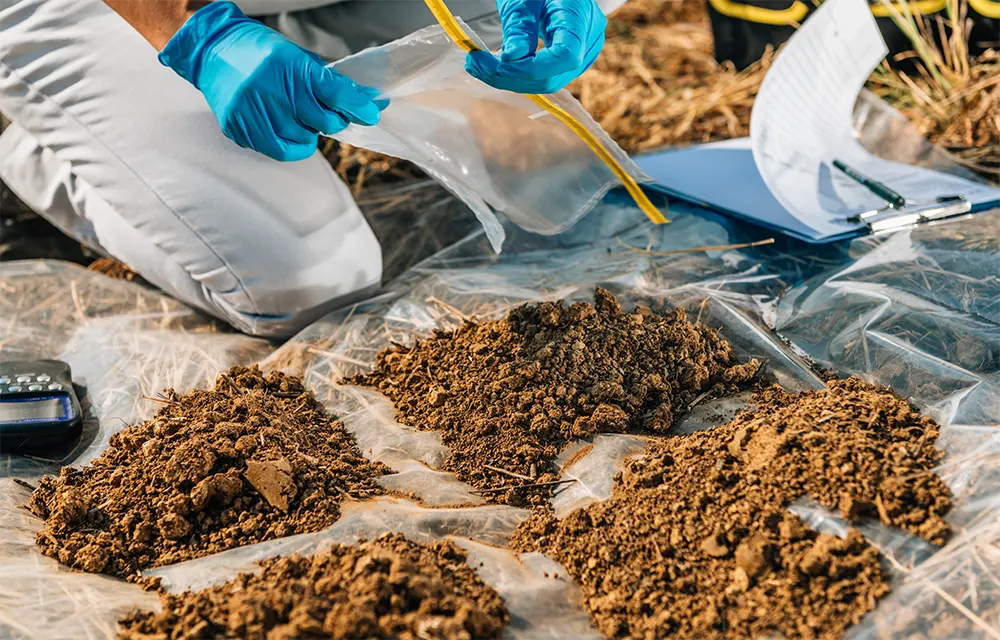
Successful civil engineering and structural engineering projects begin long before the first shovel breaks the ground. One of the most critical steps in pre-construction planning is soil testing, a process that determines the properties and behavior of the soil at a site. Without proper soil testing, foundations may fail, structures may settle unevenly, and entire projects can face costly delays or safety risks.
In New Zealand, where varying geology and seismic activity present unique construction challenges, soil testing is not just recommended but it is essential for safe, cost-effective, and long-lasting construction.
Understanding Soil Testing and Its Purpose
Soil testing, also referred to as geotechnical investigation, involves collecting and analyzing soil samples to understand the soil’s physical, chemical, and mechanical properties. These tests provide engineers with the critical information required to make informed decisions about foundation design, slope stability, drainage, and overall site preparation.
The main purposes of soil testing include:
- Assessing soil strength and load-bearing capacity
- Determining moisture content and drainage properties
- Identifying soil composition, density, and compaction needs
- Detecting the presence of contaminants or unstable soil layers
- Supporting environmental compliance and safety regulations
By understanding these factors before construction begins, engineers can design foundations that are both safe and optimized for cost and material efficiency.
Key Types of Soil Tests
Different projects and soil conditions require specific types of soil testing. Some of the most common tests in pre-construction planning include:
- Standard Penetration Test (SPT)
This test measures soil density and resistance by driving a sampler into the ground and recording penetration counts. SPT provides valuable information about soil strength and layering.
- Cone Penetration Test (CPT)
CPT involves pushing a cone-tipped probe into the soil while measuring resistance. It is highly effective in evaluating soft or loose soils and estimating soil stratification.
- Soil Laboratory Analysis
Samples collected from the site are tested in a laboratory to assess moisture content, particle size distribution, organic content, and shear strength. This data informs foundation design and compaction requirements.
- Permeability and Drainage Tests
These tests determine how quickly water moves through soil. This information is vital for planning drainage systems and preventing water-related structural issues.
- Chemical Analysis
Testing for pH, salts, and contaminants ensures that the soil will not corrode foundations, react with building materials, or cause environmental hazards.
Benefits of Soil Testing in Pre-Construction Planning
Conducting thorough soil testing offers multiple benefits that extend throughout the project lifecycle:
- Ensures Structural Safety
Understanding soil behavior prevents foundation settlement, cracking, and structural instability. Engineers can design foundations that match the soil’s load-bearing capacity.
- Reduces Financial Risk
Identifying soil issues before construction avoids costly remediation, redesigns, and construction delays.
- Optimizes Foundation Design
Soil test results allow engineers to select the most suitable foundation type, whether shallow footings, deep piles, or reinforced slabs. This ensures efficient use of materials and resources.
- Supports Regulatory Compliance
In New Zealand, building codes and regulations require documented soil analysis for major construction projects, ensuring adherence to safety and environmental standards.
- Improves Environmental Management
By understanding drainage patterns and soil composition, engineers can implement solutions that protect surrounding ecosystems and prevent erosion or contamination.
The Consequences of Skipping Soil Testing
Neglecting soil testing can have serious consequences. Examples include:
- Foundation Failures: Without accurate soil data, foundations may settle unevenly, leading to structural damage or collapse.
- Cost Overruns: Unanticipated soil problems can result in expensive remediation measures.
- Project Delays: Discovery of unstable or contaminated soil mid-construction can halt progress.
- Environmental Damage: Poorly managed soil and drainage issues may cause erosion, sedimentation, or contamination of nearby ecosystems.
Historical cases demonstrate that failing to account for soil conditions is a leading cause of project failure, making pre-construction soil testing an indispensable risk mitigation tool.
Integrating Soil Testing Into Project Planning
Effective pre-construction planning incorporates soil testing in the earliest project phases. This process typically follows these steps:
- Site Assessment: Engineers perform an initial review of the site, including geological maps and prior land use.
- Soil Sampling: Boreholes, test pits, and sample extraction are performed at strategic locations.
- Laboratory Analysis: Soil properties are examined to determine suitability for the planned structure.
- Geotechnical Reporting: Engineers compile findings into a report detailing soil conditions, recommended foundation types, and any necessary remedial measures.
- Design Adaptation: Foundation and structural designs are finalized based on soil data.
Early integration of soil testing ensures that decisions are grounded in data rather than assumptions, reducing risk and improving project outcomes.
Advanced Techniques in Soil Testing
Modern civil engineering increasingly relies on technological innovations for more accurate and efficient soil testing. Techniques include:
- Ground-Penetrating Radar (GPR): Provides subsurface imaging without extensive excavation.
- Geotechnical Instrumentation: Monitors soil movement, pore pressure, and strain during construction.
- Remote Sensing and Drones: Map site topography and detect potential soil hazards before excavation.
These advanced methods allow engineers to gain a deeper understanding of site conditions, enabling safer and more cost-effective construction practices.
Conclusion
Soil testing is a cornerstone of pre-construction planning in civil engineering. It provides the data needed to design safe foundations, minimize risks, comply with regulations, and optimize construction efficiency. In New Zealand, where diverse soil types and seismic activity pose unique challenges, conducting thorough soil testing is a critical step toward successful, long-lasting infrastructure.
By integrating soil analysis into project planning, civil engineers can prevent failures, reduce costs, and build resilient structures that stand the test of time.
Looking for professional soil testing services and geotechnical services for your project?
Our team offers comprehensive site investigations, soil testing, and geotechnical reporting tailored to ensure safe and sustainable construction.
Visit our Contact Us page to discuss your project requirements and start with confidence.