
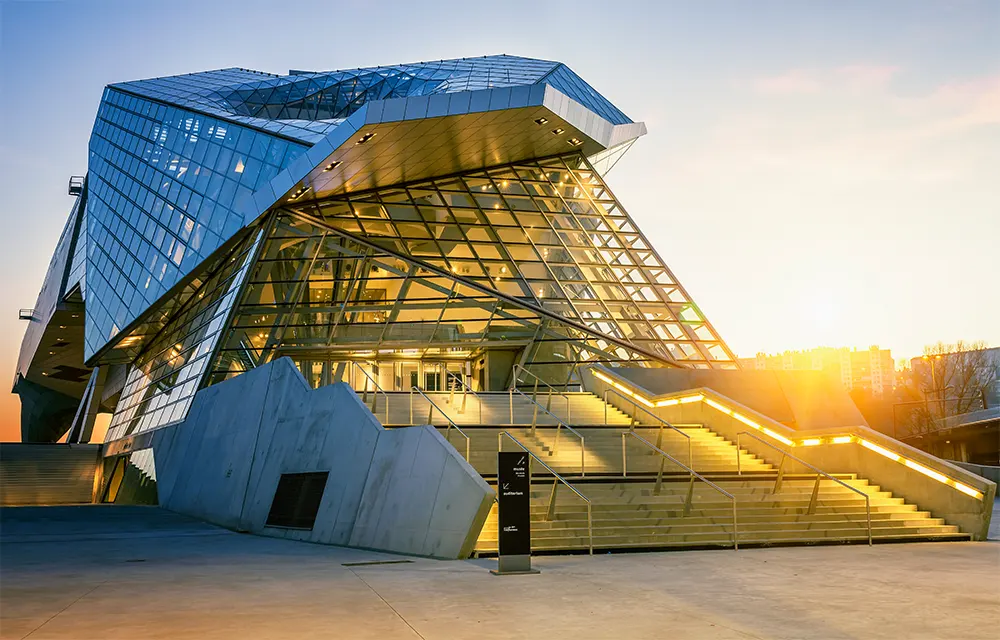
Modern architecture is increasingly defined by complexity. From irregular geometries and asymmetric layouts to mixed-use towers and architecturally expressive forms, today’s buildings often move far beyond simple, regular structural systems. While these designs push creativity and functionality forward, they also introduce significant engineering challenges. Structural engineering for complex and irregular buildings plays a critical role in transforming bold architectural visions into safe, buildable, and durable structures.
This article explores how structural engineers approach complex and irregular buildings, the challenges these projects present, and the strategies used to ensure stability, performance, and compliance throughout design and construction.
Understanding Structural Engineering for Complex Buildings
A building is considered structurally complex or irregular when its geometry, load paths, materials, or functional requirements deviate from conventional design assumptions. This complexity may arise from architectural form, site constraints, or performance requirements.
Irregularity can occur vertically, horizontally, or both. Examples include setbacks, transfer structures, sloping columns, cantilevers, uneven mass distribution, or mixed structural systems. These features disrupt predictable load paths and require a deeper level of structural analysis and coordination.
Structural engineering for complex buildings begins with identifying where and why irregularity exists and understanding how it affects structural behaviour.
The Impact of Irregular Geometry on Load Paths
In regular buildings, loads flow predictably from slabs to beams, columns, and foundations. In irregular buildings, load paths are often indirect or discontinuous, increasing the risk of local overstress or global instability.
Structural engineers must carefully trace how gravity, wind, and seismic loads travel through the structure. This often involves designing transfer beams, trusses, or slabs to redirect forces safely. Any misalignment between structural elements can introduce torsion, differential movement, or unexpected stress concentrations.
Understanding and controlling load paths is fundamental to ensuring that complex buildings perform as intended.
Advanced Structural Analysis for Irregular Buildings
Complex and irregular buildings rarely rely on simplified analysis methods alone. Advanced structural analysis techniques are essential to accurately predict behaviour under various loading scenarios.
Three-dimensional modelling is commonly used to capture the interaction between structural elements. Nonlinear analysis may be required where materials behave beyond elastic limits or where large deformations influence performance. Dynamic analysis is often necessary for wind-sensitive or seismically active regions.
Structural engineering for complex buildings relies heavily on accurate modelling, validation, and interpretation of analysis results to ensure safety and serviceability.
Managing Torsion and Asymmetrical Behaviour
One of the most significant challenges in irregular buildings is torsional response. When mass and stiffness are not evenly distributed, lateral loads can cause twisting as well as translation.
Torsional effects increase demands on structural elements and connections, particularly during seismic events. Engineers must design lateral systems that balance stiffness and control rotation, often through strategic placement of shear walls, braced frames, or moment-resisting systems.
Ignoring torsional behaviour can lead to excessive damage or failure, making its management a priority in complex structural design.
Integrating Multiple Structural Systems
Complex buildings often require the integration of multiple structural systems within a single structure. For example, a building may use reinforced concrete cores, steel framing for long spans, and post-tensioned slabs for flexibility.
Each system has different stiffness, strength, and deformation characteristics. Structural engineers must ensure compatibility between systems so that loads are shared appropriately and movements remain within acceptable limits.
Effective integration requires detailed coordination, careful detailing, and a strong understanding of how different materials behave together over time.
Seismic Considerations in Irregular Buildings
In seismic regions, irregularity significantly increases design complexity. Irregular buildings tend to experience amplified seismic demands, particularly at discontinuities such as setbacks, soft storeys, or transfer levels.
Structural engineering for complex buildings in seismic zones focuses on ductility, redundancy, and controlled energy dissipation. Engineers may introduce seismic joints, supplemental damping systems, or base isolation where appropriate.
Compliance with seismic codes is only the starting point; performance-based design approaches are often used to better understand and manage earthquake behaviour in irregular structures.
Foundation Design for Complex Structural Loads
Irregular buildings often impose non-uniform loads on foundations. Concentrated loads, eccentric forces, and varying settlement demands must all be addressed at the ground interface.
Foundation systems may include combined footings, raft foundations, deep piles, or hybrid solutions designed to distribute loads effectively. Close collaboration between structural and geotechnical engineers is essential to ensure that foundation design responds appropriately to both structural demands and ground conditions.
Structural engineering for complex buildings cannot be separated from geotechnical considerations, particularly at the foundation level.
Coordination with Architectural Intent
One of the defining aspects of complex building projects is the close relationship between structural engineering and architecture. Structural systems must support architectural intent without compromising safety or efficiency.
This often requires early and ongoing collaboration, where engineers contribute to form-finding and propose structural solutions that enhance rather than constrain design. Structural elements may be exposed, expressed, or integrated into architectural features.
Successful complex buildings are those where structural engineering is seen as an enabler of design, not a limitation.
Constructability and Temporary Works Challenges
Complex and irregular buildings are often challenging to construct. Non-standard geometries, long spans, and transfer structures may require specialised construction techniques and temporary works.
Structural engineers must consider construction sequencing, temporary load cases, and stability during incomplete stages. Elements that are stable in their final configuration may be vulnerable during erection.
Addressing constructability during design reduces on-site risk, improves safety, and avoids costly delays or redesigns.
Material Selection and Performance Considerations
Material choice plays a critical role in complex structural design. High-strength materials, composite systems, and innovative construction techniques may be required to achieve performance goals.
Structural engineers evaluate materials not only for strength but also for stiffness, durability, fire performance, and long-term behaviour. In irregular buildings, differential creep, shrinkage, and thermal movement can significantly affect performance.
Careful material selection and detailing help manage these effects and ensure consistent behaviour across the structure.
Compliance, Safety, and Regulatory Approval
Complex buildings often face increased scrutiny during regulatory approval. Building officials may require additional justification, peer reviews, or performance-based assessments.
Structural engineering for complex buildings documentation must clearly demonstrate how safety, serviceability, and resilience requirements are met despite irregularity. Transparency in assumptions, analysis methods, and design intent is essential.
A robust engineering approach supports smoother approvals and greater confidence among stakeholders.
The Role of Engineering Judgement and Experience
While software and analysis tools are invaluable, structural engineering for complex buildings ultimately relies on engineering judgement. Experience allows engineers to identify critical issues, assess risk, and make informed decisions where data alone is insufficient.
Understanding how real structures behave, how construction influences performance, and how systems interact under extreme conditions is essential in managing complexity.
This combination of technical expertise and practical insight distinguishes successful Structural engineering for complex buildings projects.
Conclusion: Engineering Confidence into Complex Forms
Structural engineering for complex buildings is about more than calculations, it is about understanding behaviour, managing risk, and enabling architectural ambition without compromising safety. As buildings become more expressive and demanding, the role of structural engineers continues to expand in importance.
Through advanced analysis, integrated design, and close collaboration with architects and geotechnical engineers, complex structures can be delivered safely, efficiently, and sustainably. When approached correctly, irregularity becomes an opportunity for innovation rather than a source of risk.
If you are planning or designing a complex building and require expert structural engineering support, contact us to discuss how our experience in advanced structural design can help turn ambitious concepts into reliable, buildable realities.