
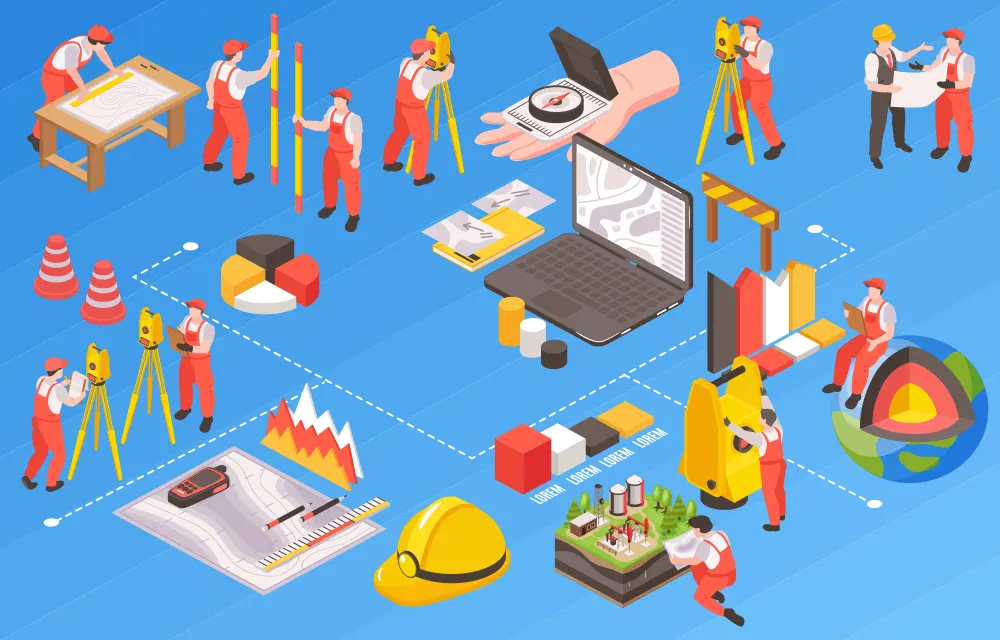
In modern civil engineering and geotechnical engineering, geotechnical instrumentation and monitoring systems have become indispensable tools for ensuring safety, performance, and compliance throughout construction. Whether a project involves deep excavations, tunneling, slope stabilization, or high-rise foundations, geotechnical instrumentation construction plays a critical role in identifying potential risks before they become serious problems.
In this article, we’ll explore what geotechnical instrumentation is, its role in construction monitoring, the types of instruments used, and how real-time data collection improves safety and decision-making in complex engineering projects.
Understanding Geotechnical Instrumentation Construction
Geotechnical instrumentation construction refers to the use of sensors, devices, and data acquisition systems to measure soil and structural behavior during and after construction. These instruments monitor how the ground and structures respond to loads, environmental factors, and construction activities over time.
This continuous feedback helps engineers evaluate whether the site is behaving as predicted in the design phase, and if not, take corrective actions promptly.
In short, geotechnical instrumentation turns assumptions into data, enabling evidence-based engineering decisions and reducing uncertainty in geotechnical projects.
Why Construction Monitoring Matters
Geotechnical monitoring is more than a technical procedure, it’s a safety and risk management necessity. Construction activities, especially those involving deep excavations or large loads, can alter ground conditions significantly. Without proper monitoring, unseen soil movements or water pressure changes can lead to:
- Structural damage or foundation settlement
- Slope instability or landslides
- Retaining wall failure
- Groundwater seepage or uplift
- Safety hazards for workers and nearby structures
Through well-planned instrumentation geotechnical construction, engineers gain early warnings about these potential issues, allowing for immediate mitigation and safer project outcomes.
Key Objectives of Geotechnical Instrumentation Construction
The main purposes of geotechnical instrumentation and monitoring in construction include:
- Validating Design Assumptions:
Before construction, engineers make calculations based on soil tests and models. Instrumentation confirms whether the actual ground behavior aligns with these assumptions. - Ensuring Construction Safety:
By continuously monitoring movements, pressures, and loads, engineers can detect abnormal trends that might signal potential failures. - Assessing Construction Impacts:
Large projects can affect nearby buildings, utilities, or slopes. Monitoring ensures that these external influences remain within safe limits. - Guiding Construction Decisions:
Real-time monitoring data helps contractors adjust excavation depth, dewatering rates, or construction sequencing to maintain safety. - Supporting Regulatory Compliance:
In New Zealand and many other countries, geotechnical monitoring is often required to meet building codes and safety regulations, particularly for complex or high-risk sites.
Common Types of Instrumentation Geotechnical Construction
A variety of tools are used to measure different aspects of ground and structural behavior. Some of the most common include:
- Inclinometers
Used to measure lateral ground or wall movements, inclinometer casings are installed in boreholes or retaining structures. They are particularly useful for monitoring slopes, embankments, and deep excavations.
- Piezometers
These devices measure pore water pressure within the soil. Tracking changes in groundwater levels helps engineers understand stability risks and dewatering effectiveness.
- Settlement Plates and Extensometers
Settlement plates monitor vertical ground movement, while extensometers track the displacement between multiple depths or layers. Both provide data on how much the soil compresses under load.
- Strain Gauges
Installed on structural members like piles or retaining walls, strain gauges measure stress and strain, indicating whether materials are performing within design limits.
- Load Cells
Load cells are used to measure forces in anchors, piles, or tiebacks to ensure loads remain within safe design thresholds.
- Tiltmeters
Tiltmeters detect angular displacement or tilt in structures, which can signal early signs of foundation movement or instability.
- Vibration Monitors
Used near sensitive structures or urban sites, these instruments record ground vibrations caused by construction activities such as pile driving or blasting.
- Data Loggers and Remote Systems
Modern monitoring relies heavily on automated data loggers and wireless communication. They collect and transmit readings in real-time to central databases or dashboards for analysis and alerting.
Planning a Geotechnical Instrumentation and Monitoring Program
Successful geotechnical monitoring requires more than just installing instruments, it involves careful planning, design, and interpretation. The process generally includes:
- Defining Monitoring Objectives
Before selecting equipment, engineers determine what they need to measure (such as displacement, pore pressure, or load) and why.
- Designing the Monitoring System
Instrument locations, depths, and frequencies are strategically planned to capture the most representative data of site behavior.
- Establishing Baseline Readings
Initial measurements taken before construction begin serve as benchmarks for detecting changes later.
- Data Collection and Analysis
Ongoing readings are compared to design predictions. Automated systems can flag anomalies that exceed set thresholds.
- Reporting and Decision-Making
Regular reports summarize trends and highlight potential risks. If any value exceeds safe limits, engineers coordinate with contractors to modify construction methods or strengthen supports.
Integration of Real-Time Data and Smart Monitoring
The shift toward smart monitoring technologies has revolutionized geotechnical engineering. Using IoT-based sensors, cloud data storage, and AI-driven analytics, engineers can now:
- Access live data from anywhere
- Receive instant alerts on abnormal behavior
- Visualize data through interactive dashboards
- Improve predictive modeling accuracy
This technology enhances data reliability and response time, allowing faster decision-making and reduced risk in critical infrastructure projects.
Case Applications of Geotechnical Instrumentation in New Zealand
In New Zealand, where projects often face seismic activity, soft soils, and variable geology, instrumentation is essential in:
- Tunnel and road construction in Auckland and Wellington
- High-rise developments requiring deep foundations
- Slope stabilization in hilly regions and coastal areas
- Bridge and port infrastructure subjected to dynamic loads
Real-time monitoring systems in these projects ensure that engineers can manage geotechnical risks effectively and comply with strict safety standards.
Benefits of Instrumentation Geotechnical Construction
Implementing an effective geotechnical instrumentation and monitoring system offers numerous advantages, including:
- Enhanced safety for workers and nearby structures
- Early detection of soil movement or water pressure changes
- Reduced construction delays through informed decision-making
- Compliance with environmental and safety regulations
- Improved design validation and post-construction assessment
Ultimately geotechnical instrumentation transforms risk management into proactive safety assurance.
Conclusion
Geotechnical instrumentation and monitoring are vital components of modern construction, providing engineers with the data they need to ensure safety, reliability, and compliance. By continuously tracking how the ground and structures respond during construction, engineers can anticipate problems, optimize methods, and prevent costly failures.
In a country like New Zealand, where challenging terrain and seismic risks demand precision and foresight, geotechnical instrumentation is not just a best practice, it’s a necessity for sustainable and safe infrastructure development.
Looking for expert construction monitoring and instrumentation services?
Our engineering team provides comprehensive monitoring solutions for civil engineering, structural engineering, and infrastructure development projects across New Zealand.
Learn more about our Geotechnical Engineering Services or Contact Us today to discuss how we can help you build with confidence.