
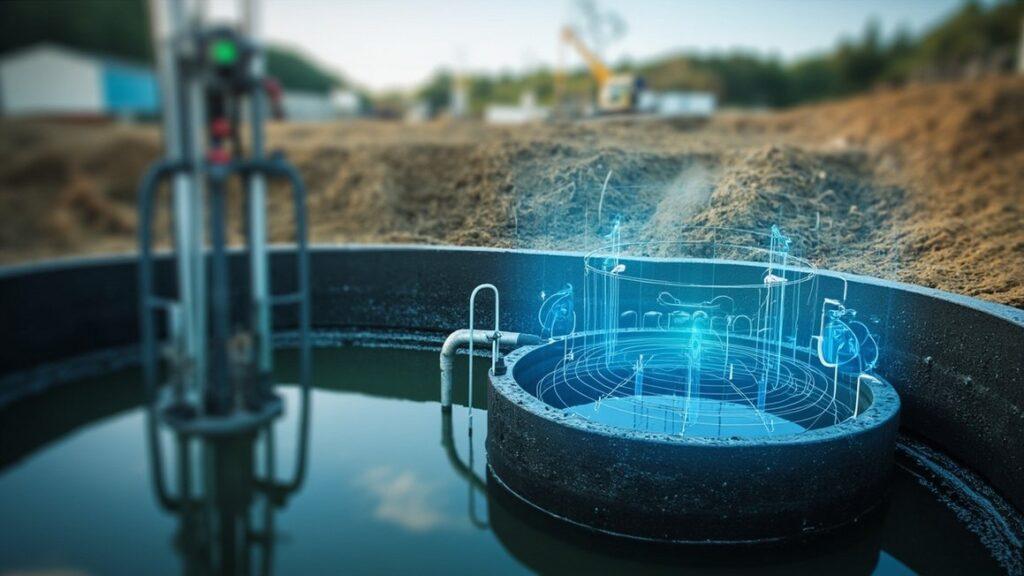
A single poorly sized wet well can turn a minor power outage into a public health incident, a consented discharge breach, and a six-figure remediation bill. Across New Zealand, pump stations are the quiet workhorses of our wastewater networks, yet they remain one of the most under-scrutinised elements of asset design until something goes wrong. Getting the fundamentals right at the design stage is far cheaper than retrofitting emergency storage or replacing undersized pumps after a council audit flags non-compliance.
This article sets out the core principles of wastewater pump station design in the New Zealand context: how wet wells are sized, how pumps are selected and matched to system curves, and how emergency storage requirements are determined and justified to territorial authorities. It draws on common council vesting standards, AS/NZS 3500 principles, and practical lessons from projects across the country.
Why Pump Station Design Deserves More Attention
Pump stations sit at the interface between gravity reticulation and rising mains, and they are typically the first point of failure during storm events, power outages, or blockages. Unlike gravity pipelines, which fail gracefully, a pump station failure is immediate and visible — overflows, odour complaints, and in the worst cases, consent breaches reportable to regional councils under the Resource Management Act.
Most New Zealand territorial authorities, including Auckland Council, Wellington Water, and Christchurch City Council, have their own Infrastructure Design Standards (IDS) or equivalent that pump stations must satisfy before vesting. These documents typically specify minimum wet well volumes, pump duty requirements, telemetry and alarm standards, and — critically — emergency storage durations ranging from 8 to 24 hours depending on the station’s criticality, catchment population, and proximity to sensitive receiving environments.
Key takeaway: treat pump station design as a systems problem, not a pipe-sizing exercise. The wet well, pump selection, rising main, and emergency storage are interdependent, and optimising one in isolation almost always creates problems elsewhere in the system.
Sizing the Wet Well: Balancing Cycling and Retention
Wet well sizing is governed by a trade-off that catches out many first-time designers: too small a wet well causes excessive pump cycling, burning out motors and seals well before their design life; too large a wet well encourages septicity, as wastewater sits for extended periods generating hydrogen sulphide and corroding concrete and steel components.
The standard approach uses the minimum cycle time formula, which balances pump starts per hour against motor manufacturer recommendations — typically no more than 6 to 10 starts per hour for submersible pumps, depending on motor size and manufacturer guidance. The effective storage volume between pump start and stop levels is calculated from:
- Average inflow rate (dry weather flow, often derived from population equivalent and per-capita wastewater generation, typically 180–250 L/person/day in NZ residential catchments)
- Peak wet weather flow, incorporating infiltration and inflow allowances common in older reticulated catchments
- Pump duty flow rate at the operating point on the pump curve
In practice, this means a small rural pump station serving 50 households might require a wet well of only 1.5–2 m³ of active storage, while a strategic trunk station serving 5,000 population equivalent may need 15–20 m³ just to manage cycling, before emergency storage is even considered.
Retention time is the other constraint. Most NZ councils, aligned with Water New Zealand’s Code of Practice guidance, recommend keeping average retention time under 30 minutes at average dry weather flow to limit septicity risk, particularly in warmer regions like Northland and the Bay of Plenty where sulphide generation accelerates.
Pump Selection: Matching Duty to the System Curve
Once wet well geometry is fixed, pump selection becomes an exercise in matching the system curve — static lift plus friction losses through the rising main — against the pump’s performance curve. This is where many designs fall short, particularly when designers specify pumps based on peak flow alone without checking performance across the full operating range.
A duty/standby configuration remains standard practice for all but the smallest NZ pump stations, with most council standards requiring N+1 redundancy as a minimum for any station serving more than a handful of properties. For critical trunk stations, N+2 configurations are increasingly specified, particularly where the receiving environment includes shellfish beds, swimming beaches, or sensitive freshwater ecosystems.
Variable speed drives (VSDs) are increasingly common in New Zealand pump station upgrades, allowing pumps to track inflow more closely, reduce surge in rising mains, and soften the impact of low-flow periods on wet well septicity. However, VSDs add capital and maintenance cost, and should be justified against actual operational benefit rather than specified as default best practice.
Real-world example: a coastal pump station upgrade in the Bay of Plenty originally specified fixed-speed duty/standby pumps sized for peak wet weather flow. Post-construction monitoring showed excessive cycling during dry weather periods, with motors starting up to 18 times per hour — well beyond manufacturer tolerance. Retrofitting VSDs resolved the cycling issue but required significant electrical and control system rework that could have been avoided with better flow modelling at design stage.
Emergency Storage: Meeting the 8–24 Hour Standard
Emergency storage is where New Zealand practice diverges most visibly from some international standards, and where council requirements vary significantly by region and station criticality. Most territorial authorities require a minimum of 8 hours of emergency storage at average dry weather flow for low-risk stations, rising to 24 hours for stations discharging near sensitive receiving environments or serving larger catchments where overflow consequences are severe.
Emergency storage is intended to buffer the network during power outages, mechanical failure, or planned maintenance, giving operations teams time to respond with generators, tanker trucks, or repair crews before an overflow event occurs. The storage volume is typically calculated as:
- Average dry weather flow (L/s) multiplied by the required storage duration (hours), converted to an effective volume above normal operating levels
- Adjusted for any wet weather allowance if the station is known to experience significant infiltration and inflow
For context, a station with an average dry weather flow of 5 L/s requiring 12 hours of emergency storage needs approximately 216 m³ of additional capacity — often achieved through oversized wet wells, dedicated storage tanks, or overflow detention structures integrated into the site layout.
As one experienced Wellington Water asset manager noted in a recent industry presentation: “Emergency storage isn’t just a compliance checkbox — it’s the difference between a planned response and a reportable overflow. Councils are increasingly scrutinising this at the vesting stage, and retrofitting storage into a commissioned station is exponentially more expensive than designing it in from day one.”
Key takeaway: confirm emergency storage requirements with the relevant council at concept design stage, not at detailed design. Requirements vary significantly between regions, and some councils apply different standards depending on whether the station discharges to a reticulated network, a treatment plant, or directly influences a sensitive receiving environment.
Vesting Standards and Practical Compliance
Vesting standards add another layer of complexity specific to New Zealand practice. Before a council accepts ownership and ongoing maintenance responsibility for a pump station, the asset must typically demonstrate compliance against a detailed IDS checklist covering structural design (often referencing AS/NZS 3500 and relevant structural codes for below-ground concrete structures), electrical and control standards, telemetry integration with the council’s SCADA network, access and confined space requirements under WorkSafe guidance, and odour control provisions.
Developers and designers frequently underestimate the telemetry and SCADA integration requirements, which often dictate specific hardware and communication protocols that must be confirmed with council operations teams early in design — not assumed from generic specifications. A mismatch here can delay vesting by months, even when the hydraulic and mechanical design is fully compliant.
Practical Recommendations for Designers and Developers
- Engage the relevant territorial authority’s three waters team at concept design stage to confirm emergency storage duration, vesting checklist requirements, and SCADA/telemetry standards specific to that council.
- Model the full range of flow conditions — minimum dry weather, average dry weather, and peak wet weather — rather than designing solely around peak flow.
- Verify pump cycling frequency against manufacturer-recommended starts per hour before finalising wet well geometry.
- Build emergency storage into the site layout early; retrofitting storage tanks after civil works are complete is significantly more costly and disruptive.
- Document design assumptions clearly for the council’s records, as this materially speeds up vesting approval and reduces disputes during asset handover.
Getting It Right From Concept Stage
Pump station design in New Zealand sits at the intersection of hydraulic engineering, mechanical specification, and council compliance frameworks that vary meaningfully by region. The councils that require 24 hours of emergency storage are not being overly cautious — they are responding to real overflow events and the growing scrutiny of discharge consents under tightening environmental standards. Designers who build these requirements into their process from day one, rather than treating them as a final compliance hurdle, consistently deliver stations that vest faster, operate more reliably, and cost less over their asset life.
If you are scoping a new pump station or reviewing an existing asset against current council standards, Chambers Consultants works directly with territorial authorities across New Zealand to deliver wastewater pump station design that meets both hydraulic performance requirements and vesting standards from the outset. Get in touch with our wastewater engineering team to discuss your project.